Introduction: This article focuses on the "In-depth Performance Evaluation of Thailand's High-Speed Servers in Gaming and Video Scenarios," using reproducible testing methods to evaluate key metrics such as latency, jitter, packet loss, bandwidth, and stability. The goal is to provide quantifiable references for developers, operations, and procurement, facilitating optimized deployment decisions in Southeast Asia's GEO.
Testing environment and methods
This evaluation employed methods such as multi-point concurrency testing, mixed long and short connections, and real-world application traffic playback. Test nodes cover Bangkok's main backbone network and mobile network exits, using unidirectional and bidirectional detection, iperf, and custom traffic sampling to collect delay distribution and throughput fluctuations to ensure results are representative and comparable.
Network topology and node selection
Node selection focuses on metropolitan area aggregation and operator diversity, including fixed broadband and mainstream mobile operator exports. Topology simulation takes a typical path from user access to backbone and then to the target server, considering cross-border link impacts so that the evaluation can reflect the actual differences in game and video user experience.
Test metrics: latency, jitter, packet loss, and bandwidth
Latency (RTT), jitter (delay variance), packet loss rate, and available bandwidth are core metrics. Each indicator is statistically analyzed under different loads and time periods, combined with 99 percentile values and averages to assess stability, measuring server performance under sudden and continuous loads.
Gaming scenario performance review
Gaming scenarios emphasize low latency and low jitter. This evaluation measures the delay distribution under scenarios simulating multi-user real-time interaction and frequent short packet transmission, focusing on key threshold pass rates such as 50ms and 100ms. The results show that local high-speed nodes in Thailand typically meet low-latency needs for city access, but cross-border or mobile backhaul links significantly increase volatility.
Video scene performance evaluation
Video scenarios focus on bandwidth and burst resistance, measuring broadcast start time, bitrate adaptive stability, and buffering event frequency. The evaluation uses multi-bitrate concurrent pull flow testing to observe bitrate degradation under high concurrency and tightening bandwidth. Overall, Thailand's high-speed servers can guarantee HD playback under stable bandwidth conditions, but link fluctuations can cause short-term bitrate jitter.
Stability and continuous load performance
Stability testing includes long-term continuous connections and periodic peak shocks, recording connection establishment success rates and long-delay trends. The evaluation found that link quality and upstream backbone congestion are the main influencing factors. Reasonable load balancing and multi-zone redundancy can significantly improve availability and user-perceived stability.
Conclusion and optimization recommendations
Conclusion: Thailand's high-speed servers have good potential for local gaming and video applications but are sensitive to cross-border access and mobile network backhaul. Recommendations: 1) Deploy multi-point exports in conjunction with CDNs to reduce cross-border delays; 2) Prioritize optimization paths and package optimization strategies in game scenarios; 3) Video scenes combined with adaptive bitrate and caching strategies; 4) Conduct long-term monitoring to understand the characteristics of the time-varying link.

- Latest articles
- Case Evaluation Of The Performance Of Air Conditioning In German Rittal Data Center In Edge Data Centers And Large Data Centers
- Hengchuang Technology Malaysia Cloud Server Performance Evaluation And Analysis Of Localization Service Advantages
- Best Practices For Monitoring And Alert Settings To Prevent Alibaba Cloud Hong Kong Servers From Responding Unresponsively
- In-depth Analysis: Is Alibaba Cloud Hong Kong A Native IP? Bandwidth Optimization Recommendations For Cross-border E-commerce
- Recommended Types And Bandwidth Solutions For Hong Kong Server Clusters Under High-concurrency Applications
- Why Choose VPS For Cross-Border E-commerce Expansion In Korea, Japan, And Hong Kong 3 Practical Traffic Allocation And Optimization
- Key Points For Compliance And Billing Management When Purchasing SK Native IPs In Korea During Enterprise-level Operations
- Methods For Evaluating Data Center Expansion And Resilience When Choosing A Hong Kong Server Hosting Lease
- Analysis From The Perspective Of Filing And Compliance: Which Malaysian VPS Is The Best To Use And Easier To Pass The Review?
- A Comprehensive Analysis Of Which Servers Japanese Users Live On, Including Community Density And Active Periods On The Japanese Server
- Popular tags
-

Price List Of Thai Washing Machine Room Comparison Of Cost-effectiveness Of Different Brands
This article compares and analyzes the prices of different brands of washing machine rooms in Thailand to help consumers choose the most cost-effective washing machine. -
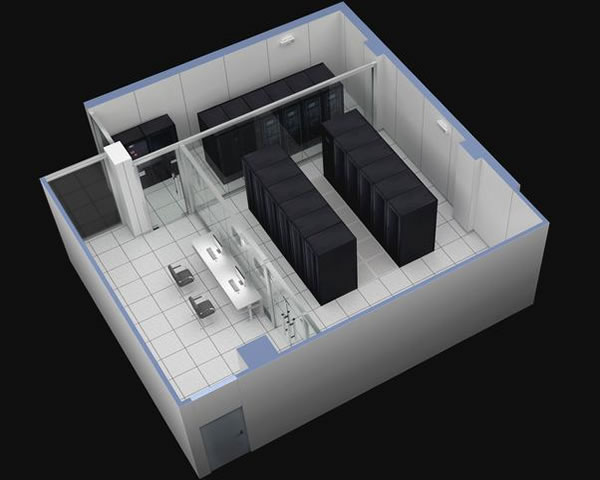
The Charm Of Thai Computer Rooms: Why Choose To Build A Data Center Here
Explore the advantages of Thai computer rooms and analyze why you choose to establish a data center in Thailand, including geographical location, cost-effectiveness, safety and other factors. -

Evaluation Of Facilities And Services Of Antai International Plaza Computer Room
this article will conduct a comprehensive evaluation of the computer room facilities and services of antai international plaza to help readers understand the advantages and characteristics of this data center.